
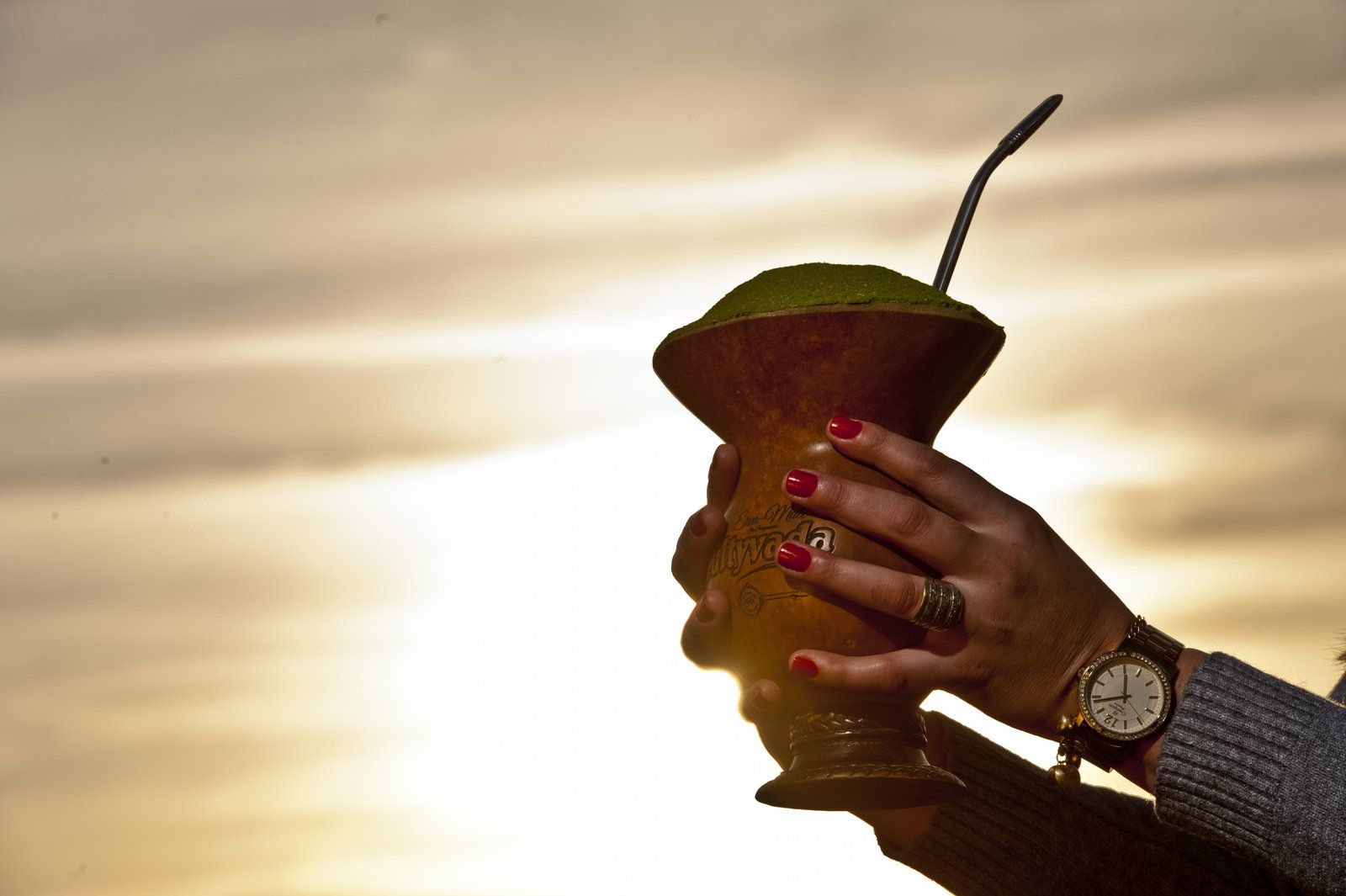
An ancestral ritual from South America, for the world
The legend of Caá Yarî
Before it was a product, yerba mate was a ceremony. This is how the Indigenous peoples explain why ka'a is never drunk alone. And it is why this leaf has crossed centuries, borders and languages to reach your gourd, your cup, your iced glass or your bowl of matcha.
The legend, as it's told in the circle
Long ago, before the forest had a name and before any border, when the river still chose for itself where to run, a Guarani tribe decided to leave. Game had grown scarce. The fields no longer answered. The elders read the signs in the sky: it was time to look for more bountiful lands. They packed the little they had: bamboo baskets, hammocks, corn and cassava seeds kept in calabashes.
Among them lived an old man who had once been the best hunter and the best storyteller in the village. But his legs could no longer keep up with the pace of the march. On the eve of the departure, he called the chief and asked to stay. He did not want to be a burden on such a long road. He preferred to end his days beside the river he had known since he was a boy, listening to the wind in the araucarias.
His daughter, Yarî, was young. She had the watchful eyes of someone who notices everything, and a laugh that lit up the house. She could have gone with the tribe. There were those who asked for her hand, and there was a future on the other side of the hills. But she would not leave her father. She stayed. She built a small straw house in a clearing where the morning arrived first, planted corn and cassava, and learned to fish among the rocks and to know every bird by its song.
The days passed slowly, the way they do for someone who is alone. Then, one afternoon of light rain, with the smell of wet earth drifting in through the door, a traveler appeared at the edge of the clearing. He had come on foot, from far away, in worn clothes, his feet hurt by the stones on the road. He wore many days of hunger on his face and tiredness on his shoulders.
The old man and Yarî did not ask who he was or where he came from. They gave him the best place by the fire, fresh water from the spring, the last piece of game they had saved for winter, and a dry corner to sleep in. Yarî roasted the cassava. The old man told stories until the fire turned to embers. And the traveler slept as he had not slept in a long time. Welcoming a guest well was the only wealth that house had, and they offered all of it.
At dawn, while the mist still covered the river, the traveler rose, changed. His worn clothes shone as if they had a light of their own, and his voice filled the clearing without needing to be loud. He was Tupã, the creator, who walked the earth in disguise to know the hearts of people. To those who close the door, he moves on. To those who open it, he leaves a gift.
Tupã led the two of them to the edge of the forest and pointed to a shrub with bright green leaves, their edges slightly serrated. It grew there, though no one had planted it: ka'a. He taught them to gather only mature branches, at the plant's right time. He taught them to pass the leaves quickly over the fire, so the heat would lock in the green and the fragrance. He taught them to dry the leaves, to pound them to a fine powder, and to consecrate them in hot water, in a calabash, drinking through a bamboo straw. And he said: This is the drink of friendship. Whoever offers it, receives. Whoever receives it, belongs. It will keep you company in lonely hours, and it will be a sign of welcome to everyone who arrives.
To Yarî, Tupã gave a mission and a new name. She would be Caá Yarî, the lady of the herb, guardian of ka'a forever, so that the plant would never be missing from the forest and no one would handle it without respect. The oldest yerba mate harvesters say she still walks the groves at dawn, when the mist rises among the araucarias. She accompanies the harvest of those who respect the plant's time, and she sends astray anyone who harvests out of greed.
That is how yerba mate earned the rule that has crossed centuries and borders: you do not drink it alone. The mate gourd passes from hand to hand and always returns to the one serving. The thermos goes around the circle. The iced glass goes to whoever has just arrived. The green powder foams in the bowl before it is served. In each of these gestures, without our noticing, the scene from the clearing repeats: someone arrives tired, someone opens the door, and yerba mate is the first thing offered.
So when you hold out the gourd, the cup or the glass to someone, you are saying what the old man and Yarî said to the traveler without needing words: you are welcome, you are part of this.
From the Guarani forest to the world
- Before 1500
Indigenous peoples were already harvesting, toasting and pounding ka'a long before the Europeans arrived, and they drank it in ceremony. Archaeologists have found yerba mate leaves in pre-Columbian graves far from the forest, a sign that the plant traveled along trade routes.
- Seventeenth and eighteenth centuries
In the Jesuit missions, yerba mate starts to be cultivated and becomes currency. Caá-miní, the fine powder of leaf without stems, was the most prized product of the time. By mule train and by boat, it travels to Asunción, Buenos Aires, Montevideo and Lima.
- The twentieth century
Syrian and Lebanese immigrants carry the custom from the River Plate (Río de la Plata) to the Levant. Today Syria is one of the world's biggest consumers of yerba mate, in small glasses passed from hand to hand.
- Today
From the gaúcho circle to a bowl of yerba mate matcha at the coffee shop: the same leaf, in six languages, for anyone who wants to welcome others well. It's not just another drink: it's an ancestral ritual from South America, for the world.
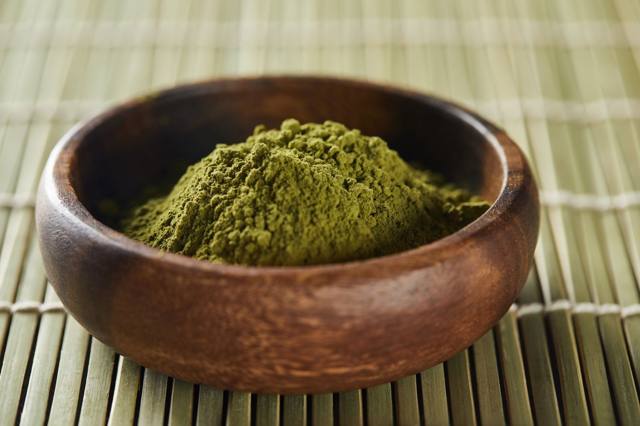
From pounded ka'a to yerba mate matcha
The oldest way to drink yerba mate was also the closest to the most modern one: toasted leaf, pounded to a powder and whisked in water. Yerba Matcha brings that custom back with today's technique. To truly carry that ancestry, the leaf has to be harvested and processed the right way:
- Leaf from mature branches harvested in the plant's own time, as Caá Yarî asks.
- Sapeco over the fire a quick pass over the heat that locks in the green, the same gesture Tupã taught.
- Fine grind of the whole leaf nothing is steeped and then discarded: you consume the leaf itself, with the caffeine and polyphenols that an infusion leaves behind.
What the legend teaches about our yerba mate
- Toast over the fireSapeco, the quick pass of the leaf over the heat that Tupã taught, is the first thing we do when the yerba mate arrives at the factory: it locks in the green and the aroma.See how we do it
- Harvest with respectLeaf from mature branches, in the plant's own time, bought from producer families in the Upper Taquari Valley. Caá Yarî would approve.Discover our origin
- Consecrate in the circleChimarrão, tereré, hot mate tea, matcha or a recipe: your way, for whoever you want to welcome. Whoever drinks, joins the circle.See the ways to drink
Join the circle.
It's not just another drink: it's an ancestral ritual from South America, for the world. Choose your Cultyvada and repeat the oldest gesture of yerba mate: offering.